Tuesday, November 29, 2011

HOW TO TRAIN A PET LION


The British Colonial Office during the 1930s came up with the notion that the Kenya highlands could be settled by Englishmen who were experienced farmers and adventurers. This was thought of as a sort of second try at what England meant New England (USA) to be during the 1700s. 
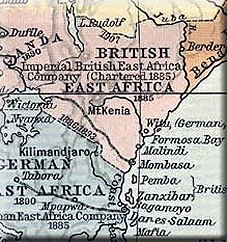

map of KenyaWell, it worked pretty well. Englishmen who felt hemmed in by their neighbors, and by the changeless class status into which all Englishmen were thrown, took the opportunity, sold out, and went to Kenya to seek their fortune. They settled in the Kenya Highlands west and north of Nairobi, the capital of Kenya.

They made the highlands produce all sorts of commodities, including coffee, tea, wheat, oats, vegetables, cattle crossed with local breeds, and much more. Men like Lord Delamere cashed in huge fortunes and estates in the UK and came to Kenya and developed farming and commercial business from scratch. They really must be credited with laying the foundation of commercial and agricultural life in Kenya as it  is today.


Among the settlers were many rough and ready characters. They developed their own oddities, and it was almost essential socially to be just a bit strange in some way. Jim Hodson was a personal friend of my parents when they were missionaries in Kenya, and our family used to visit his farm. The Hodsons were Bible believers and a delight to be around. Jim had some amazing tales to tell of life in those early days. 


One settler, living not far from the Hodson farm, had some wild pets he had tamed. His pride was his full grown pet lion, which was actually house broken and pretty much had the run of the farm. As with all settlers, this man and his wife had beautiful gardens and flower beds all around the home. The perfect climate in the Kenya Highlands made it possible to have a year round paradise with minimum care and effort.
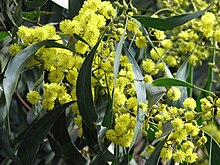

Jim Hodson raised cattle and had a large vegetable garden, but his main commercial product was wattle bark. Wattle is from the Acacia family of trees, and its bark has medical use. In Kenya, Wattle bark was used to extract tanning acids for leather processing. Jim's wife once said that when someone called on the phone, and when Jim was out on the farm removing the bark from the trees, she did not know whether to tell the caller Jim was barking or stripping. Alas, trade talk.


Jim Hodson told us the following story about one of his neighbors.


All settlers had an African hired hand to simply keep the grounds immaculate, and a popular Kenya innovation was the "sun downer," a cocktail gathering at sun down for other neighboring settlers. 


This white farmer came in from his farm one day, and walking through his flower garden and grounds, found that they had been dug up pretty badly. He was furious, and he knew just who had done it-- his pet lion. He had broken the lion of rooting up the flower beds, but he figured the lion had backslidden. 


"I will teach that beggar to muck about in my gardens." 


The settler, like many of his fellow farmers, carried a walking stick about with him, though he was not at all lame. It is a British thing, and if you don't understand it, you must ask them about it. I don't understand it either. 


He took his walking stick and went looking for his pet Simba, lion. He found him, and he promptly gave him a good caning. The lion was hardy, and the caning did little harm, but the lion cringed, and finally the lion slunk off into the shadows humiliated. 


"That will teach that rascal." The settler felt good about his being a firm disciplinarian with his pets around the farm. He then walked into his living room, and what do you think he found lying in front of the fire in his fire place? 


SIMBA !! His pet lion. 


The settler had just given a totally wild lion a good caning. He was terrified, but it was too late for that. He became quite a legend in the highlands, and his friends loved to invite him around to cane the lions on their plantation. 


I suppose there is a moral in this. 


If nothing else, it simply shows that man is master of the wild kingdom, BUT, only if man has no fear. That is very hard to accomplish unless man believes he is in charge. 


Try it, and let me know how it works for you. We have some very wild feral hogs here in Texas that are known to be very vicious. I would like to invite you to come and visit us, and you can show me how to cane a wild hog.

Saturday, November 26, 2011

COMIC RELIEF- JINGLE BELLS FROM GUJARAT


Not to vorry, for you I give pipty percent discount song:


Ve got more in the go down.....


Thursday, November 17, 2011

CHINA'S FOREIGN POLICY


It seems that China has a record of confrontation with its best customers


What does this mean. We know that China is heavily invested in trade with the USA, which is mostly one sided as China makes most US goods in the market place. At the same time, China makes missiles that they inform us can reach Nebraska etc etc.


Now, look at the dispute of the border between India and China. This is the same picture. China agitates India while making trade agreements. 


China keeps the heat on Taiwan also, and other Asian nations resist China while trading with China. It seems to me that this is some primal notion of international relations from a thousand years ago. I wonder if the history of China would bear this out. 


So, if China keeps this up, it would seem that a stand off with the whole world is in the offing, like two gun slingers with their hand poised to draw, China wants to look aggressive while cooing like a dove about more trade.


Bah. What fools we are to turn out back on Mexico, South and Central America, Africa and much of Asia to pamper the dragon.


Here is the story of the Big Red Bully of the North:

Sunday, November 13, 2011

THE SWAGMAN


He would be considered dangerous by Australian authorities today. If he were not their national symbol of the past, the government agents would sock him away in prison.

When someone shows too much individuality, he must be watched. He may well be a terrorist or illegal immigrant. The USA Homeland Security also watches anyone who is a bit weird.

In past days in Texas, Arizona, and the Outback or Australia, life was spiced up and made colorful by these odd fellows.

In Australia, it was the Swagman.

swagman, also called a swaggiesundowner or tussocker, is an old Australian and New Zealand term describing an underclass of transient temporary workers, who travelled by foot from farm to farm carrying the traditional swag (bedroll). Also characteristic of swagman attire was a hat strung with corks to ward off flies.
Particularly during the Depression of the 1890s and the Great Depression of the 1930s, unemployed men travelled the rural areas of Australia on foot, their few meagre possessions rolled up and carried in their swag. Typically, they would seek work in farms and towns they travelled through, and in many cases the farmers, if no permanent work was available, would provide food and shelter in return for some menial task.

Another form of the swagman was the "pack horse bagman" who rode a horse and led one or two pack horses in his travels, typically in the Northern Territory. The pack horse bagman called in at stations where he would work shoeing horses, mustering, repairing bores, etc.

In the USA the same exact era produced the Ho Bo. He did the same thing. In the 1970s I pastored a small church in the California desert on the Union Pacific Railroad. Our town station was a shift change point, so all trains stopped for a while. Ho Bo's would get off the train, and ours was the only church in town where the parsonage was occupied all the time. So, I had many visits. 

Most of the men "riding the rails" were not Ho Bo's anymore. They were basically down and out beggars. But, I knew a genuine Ho Bo because they would always insist on working before I fed them. It has always been a point of honor in that profession. You must give the Swagman of Australia and the Ho Bo or the USA high credit today for not accepting entitlement. They had an ethic that many millionaires don't have.

The following discussion of the Swagman is uncanny, for it describes the American Ho Bo in all details. There must be some sort of quirk in human social behavior which produces these odd fellows. The following is from Wikipedia:

Swagmen were often victims of circumstance who had found themselves homeless. Others were rovers by choice, or else they were on the run from police (bushrangers). Many were European or Asian migrants seeking fortune on the goldfields. One such swagman was Welshman Joseph Jenkins, who travelled throughout Victoria between 1869 and 1894, documenting his experiences in daily diary entries and through poetry.[11] Swagmen ranged in age from teenagers to the elderly. Socialist leaderJohn A. Lee's time as a swagman while a teenager informed his political writing,[12] and also featured directly in some of his other books. Novelist Donald Stuart also began his life as a swagman at age 14. Several of his novels follow the lives of swagmen and aborigines in the Kimbereley and Pilbara regions of Western Australia. Many swagmen interacted with aborigines along their travels; bushwear designer R.M. Williams spent his latter teen years as a swagman travelling across the Nullarbor Plain, picking up bushcraft and survival skills from local aboriginal tribes such as cutting mulga, tracking kangaroos and finding water.
At times they would have been seen in and around urban areas looking for work or a handout. Most eyewitness descriptions of swagmen were written during the period when the country was 'riding on the sheep's back'. At this time, rovers were offered rations at police stations as an early form of the dole payment. They roamed the countryside finding work as sheep shearers or as farm hands. Not all were hard workers. Some swagmen known as sundowners would arrive at homesteads or stations at sundown when it was too late to work, taking in a meal and disappearing before work started the next morning. The New Zealand equivalent of a sundowner was known as a tussocker.[8]
Most existed with few possessions as they were limited by what they could carry. Generally they had a swag (canvas bedroll), a tucker bag (bag for carrying food) and some cooking implements which may have included a billy can (tea pot or stewing pot). They carried flour for making damper and sometimes some meat for a stew. They traveled with fellow 'swaggies' for periods, walking where they had to go, hitch hiking or stowing aboard cargo trains to get around. They slept on the ground next to a campfire, in hollowed out trees or under bridges.

And, we could not leave this topic without giving you the most famous literary story about a Swagman.
Waltzing Matilda.

Once a jolly swagman camped by a billabong
Under the shade of a coolibah tree,
And he sang as he watched and waited till his billy boiled
"You'll come a-Waltzing Matilda, with me"

Waltzing Matilda, Waltzing Matilda
"You'll come a-Waltzing Matilda, with me"
And he sang as he watched and waited till his billy boiled,
"You'll come a-Waltzing Matilda, with me".

Down came a jumbuck to drink at that billabong,
Up jumped the swagman and grabbed him with glee,
And he sang as he shoved that jumbuck in his tucker bag,
"You'll come a-Waltzing Matilda, with me".

Waltzing Matilda, Waltzing Matilda
"You'll come a-Waltzing Matilda, with me"
And he sang as he shoved that jumbuck in his tucker bag,
"You'll come a-Waltzing Matilda, with me".

Up rode the squatter, mounted on his thoroughbred,
Down came the troopers, one, two, three,
"Where's that jolly jumbuck you've got in your tucker bag?"
"You'll come a-Waltzing Matilda, with me".

Waltzing Matilda, Waltzing Matilda
"You'll come a-Waltzing Matilda, with me"
"Where's that jolly jumbuck you've got in your tucker bag?",
"You'll come a-Waltzing Matilda, with me".

Up jumped the swagman and sprang into the billabong,
"You'll never take me alive", said he,
And his ghost may be heard as you pass by that billabong,
"You'll come a-Waltzing Matilda, with me".

Waltzing Matilda, Waltzing Matilda
"You'll come a-Waltzing Matilda, with me"
And his ghost may be heard as you pass by that billabong,
"You'll come a-Waltzing Matilda, with me."

And Rolf Harris captures it all:


Have any of our readers known a Swagman from long ago? Also, what is the equivalent of a Swagman in your corner of the Empire? Leave comments please.

Thursday, November 10, 2011

WHEN THE ELEPHANTS FIGHT, ONLY THE GRASS GETS HURT


Refugees..... all over Africa, and in nearby countries to Africa. Why is this happening?


It seems that some nations in Africa do not care much for the people they hurt and frighten off. Many of these refugees were productive at one time. But, they somehow become classified as non-persons who are no longer wanted. So, they run.


HERE IS A PATHETIC STORY UNFOLDING IN THE YEMEN

VIDEO OF THE SORROW

Tuesday, November 8, 2011

NEWS ITEM: AL-SHABAAB IS BIG TROUBLE IN KENYA


Having lived at the epicenter of the Mau Mau during the 1950s, as well as in Eastleigh in the 70s, I see the Kenya Government having a very similar problem. Somalis who fled Somalia to escape Al-Shabaab are elbow to elbow with Al-Shabaab terrorists who also fled to Nairobi to find safe haven and stir the pot of hatred.


So, like the Kikuyu in Kiambu in the 1950s, like the Kikuyu chiefs, there are mixed loyalties. The Kenya police, military, and navy suffer the consequences, and the tourist trade is down. Same issues, only this time it is in the name of Allah and the bondage of Sharia Law, not freedom.


Two videos:


Monday, November 7, 2011

WHAT IS THIS BLOG ALL ABOUT?


The word "Wog" has been badly used over the years. It came to be a slur on the "natives" in much of the British Empire. Winston Churchill once said, "The Wogs begin at Dover." This was taken as a subtle slur on Europe, which was out of character for Churchill. So, he must have had another meaning.


Perhaps Churchill used Wog the way many of us used it. The African or Indian was a potential faithful friend, servant, and nuisance. It all depended on what sort of relationship you and the Wog had.


When I was in secondary school in Kenya I one day opened an old dictionary from England to see if they included the word "Wog". They did, and the only definition given was "Worthy Oriental Gentleman". Revisionists today on the Web have come up with several other definitions which make it very clear that they are young hot heads who love to make up facts as they go along.


In my era in Kenya, the word Wog was used by the sons of British colonial staff and missionaries as a form of recognition of status. If a kid had grown up playing with Africans, learned Swahili or a tribal language fluently, and if he really felt partial to the Wogs in his life, the rest of us noted that, and we would call him a Wog. It was a mark of one having reached a rite of passage. 


I remember as a kid in Rift Valley Academy being told I was a Wog. I really felt like I had arrived. To this was added the affection I felt and received by several of the African Kikuyu workers around the school and in the kitchen. I liked Africa, it was home, and certain Africans were close to my heart. In fact, I did not feel much distinction at all over racial issues.


Even today, when I meet a long lost friend from the past in Kenya, he may say, "How are you doing, you old Wog?" This sucks me at once back in time to sweet memories of good days.


So, you now know who we are talking about at this blog. If you are a younger African from the post-colonial era, you may have been taught that the word Wog was a racial slur. Sometimes it was, but other times it had nothing to do with race or status.


The Title of the Blog tells you what an expatriate is, and if you add the two words together, you have the idea. Now, not wanting to be a snob, I want to make it quite clear that any "native" of the British Empire is as worthy of being called a Wog as the best of us expatriates. 


So, I do welcome you. But do remember that there is no place here for preaching and complaining about the past. Nor do I tolerate revisionist history. Many nations in the Commonwealth remade their history to make heroes of despicable characters, and many worthy "natives" were cast away because they thrived under colonialism by using it as an opportunity.


Those of us who were there know the times when Britain behaved badly, and we know when the "natives" behaved badly. It is pointless for any of us to try to put a good face on the bad. It is equally wicked to toss out the good done by Great Britain simply because it makes national leaders look bigger than life.


In fact, there have been many discussions of the various colonial masters, and Great Britain is always seen as the most self-conscious master. That is, the English usually realized that they ought to lift up the level of life in a possession before they set up shop in that nation to do business. The Raj in India had its warts for sure, but if one notes the flow of order in India today, one sees "Great Britain" everywhere.


I trust you will send in your experiences and stories. There is much to learn in such an exercise.